Made in Yangzhou · Shipped from Yiwu — Pet Toy Supply at the Source
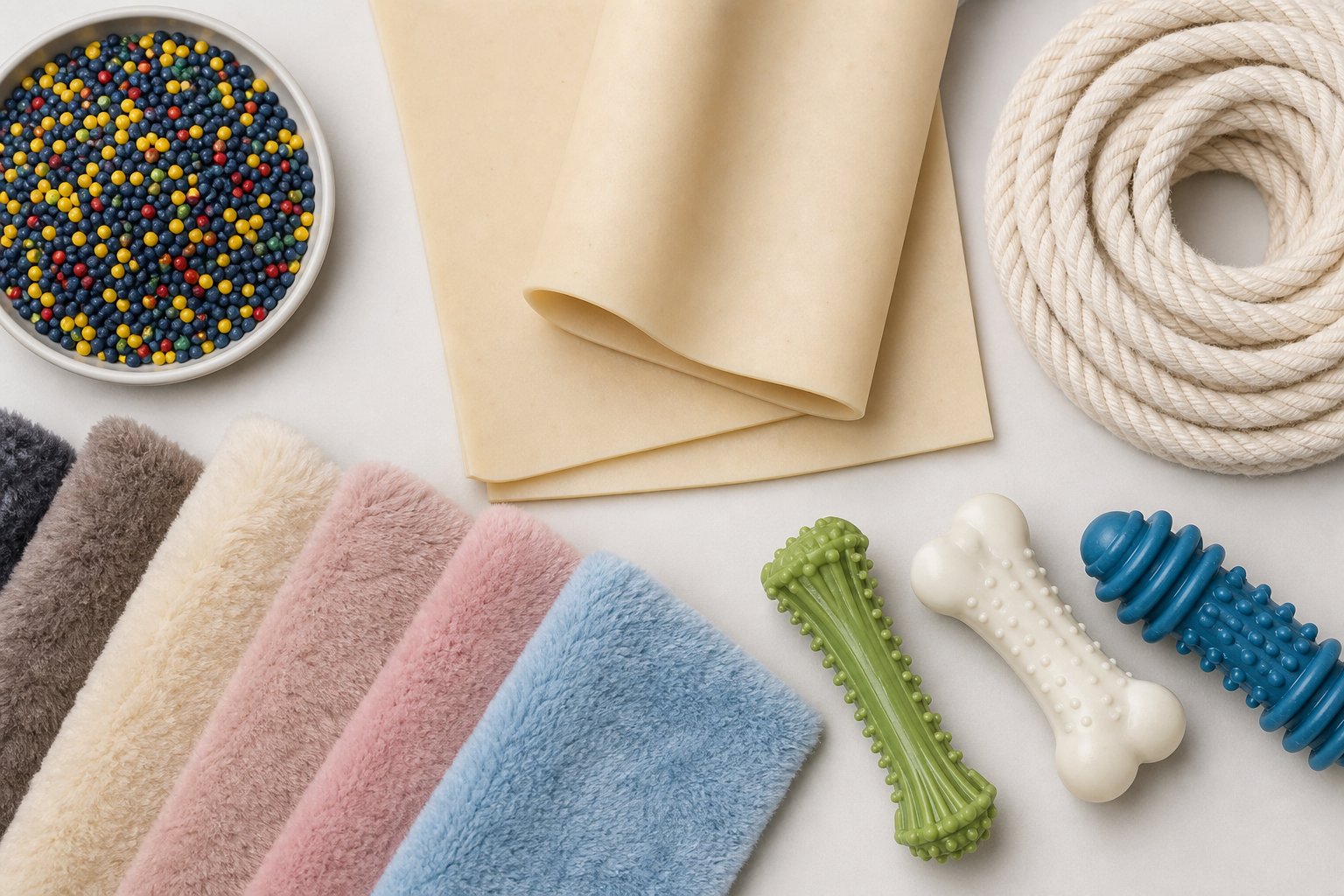
Material samples for pet toys

Pet Toy Materials Guide: 10 Materials Compared for Durability, Odor & Compliance

Natural rubber, TPR, latex, vinyl, nylon, cotton rope, plush, fill, EVA·TPU and paper & wood — the traits, durability, odor, cleaning and compliance notes of ten materials, published as one table, turning material safety from vague talk into a shared language at the negotiating table.

Materials · Overview

One matrix that turns materials into procurement language

Material decides a toy's chew resistance, odor, cleaning method and compliance boundary. This matrix compares ten mainstream materials on one yardstick, so procurement talks can name materials and test items directly instead of vague promises like eco-friendly and safe. Odor control and food contact get their own sections; each material block carries key parameters and matching categories, and the full selection logic is in the selection-matrix section below.

Master Table

Ten materials, seven dimensions, one table

Compared on the same yardstick: traits, durability, odor, cleaning, matching categories and compliance notes; test items are configured voluntarily per target market.

MaterialTraitsDurabilityOdorCleaningMatching categoriesCompliance notes
Natural rubberElastic and resilient, compression-molded and vulcanizedHigh, soft-to-hard tiersControllable with low-odor compoundsWash, air-dryChew toys, fetch & outdoor, treat & puzzleControl vulcanization residue; heavy-metal migration can be screened along EN 71-3 lines (voluntary)
TPR·TPEInjection-molded, flexible compounds and colorsMedium to high, tiered by hardnessCompound-dependent; regrind ratio is the keyWashableChew toys, treat & puzzle, interactiveLock masterbatch brand and regrind ratio; SVHC screening (voluntary)
Natural latexVulcanized, soft and warm to the touchMedium, light-chew orientedLow-odor vulcanization compounds availableWash, air-dryLatex squeaky toys, cat toysLatex-protein allergy note, labeled honestly
Vinyl (PVC)Glossy surface, rich details, molded-in squeak chambersMediumCompound-dependent, tightly managedWipe cleanLatex squeaky (vinyl versions), cat toysPhthalate limits; phthalate-free compounds available
Nylon (PA)Very hard, wear-resistant, chew-proofHigh, power-chewer orientedLow, little inherent odorWashableChew toysLabel debris risk and dog-size fit honestly
Cotton rope & sisalNatural fiber, selectable ply and densityMedium; shedding needs controlLowNot washable; air out and dehumidifyRope & tug, cat toysColor fastness for dyed rope; azo screening (voluntary)
Plush (velour / PV fleece / imitation rabbit)Tiered by weight and pile height, soft touchLow to medium; destroyers need safety linersLowSurface clean, spot washPlush squeaky, cat toys, interactive coversAzo dyes and formaldehyde limits; flammability can follow EN 71-2 lines (voluntary)
PP fillLofty and resilient, weighed at stuffingInternal material, follows the shellLowNot cleanable on its ownPlush squeaky, comfort electronicsIngestion risk if torn; pair squeaker fixing with safety liners
EVA·TPULightweight, floats, good reboundMediumLowWashableFetch & outdoor, treat & puzzleTest items configured per target market
Corrugated paper & woodNatural fiber structure, for chewing and scratchingLow to medium, consumable positioningLowNot washable; keep dryCat toys (scratchers), chews (wood)Moisture content and crack control; fumigation and quarantine documents for export
Material Profiles

Ten materials, one profile each

Description, matching categories and key parameters; tap a tag to open the category page, and see the quality page for testing and compliance details.

Natural Rubber

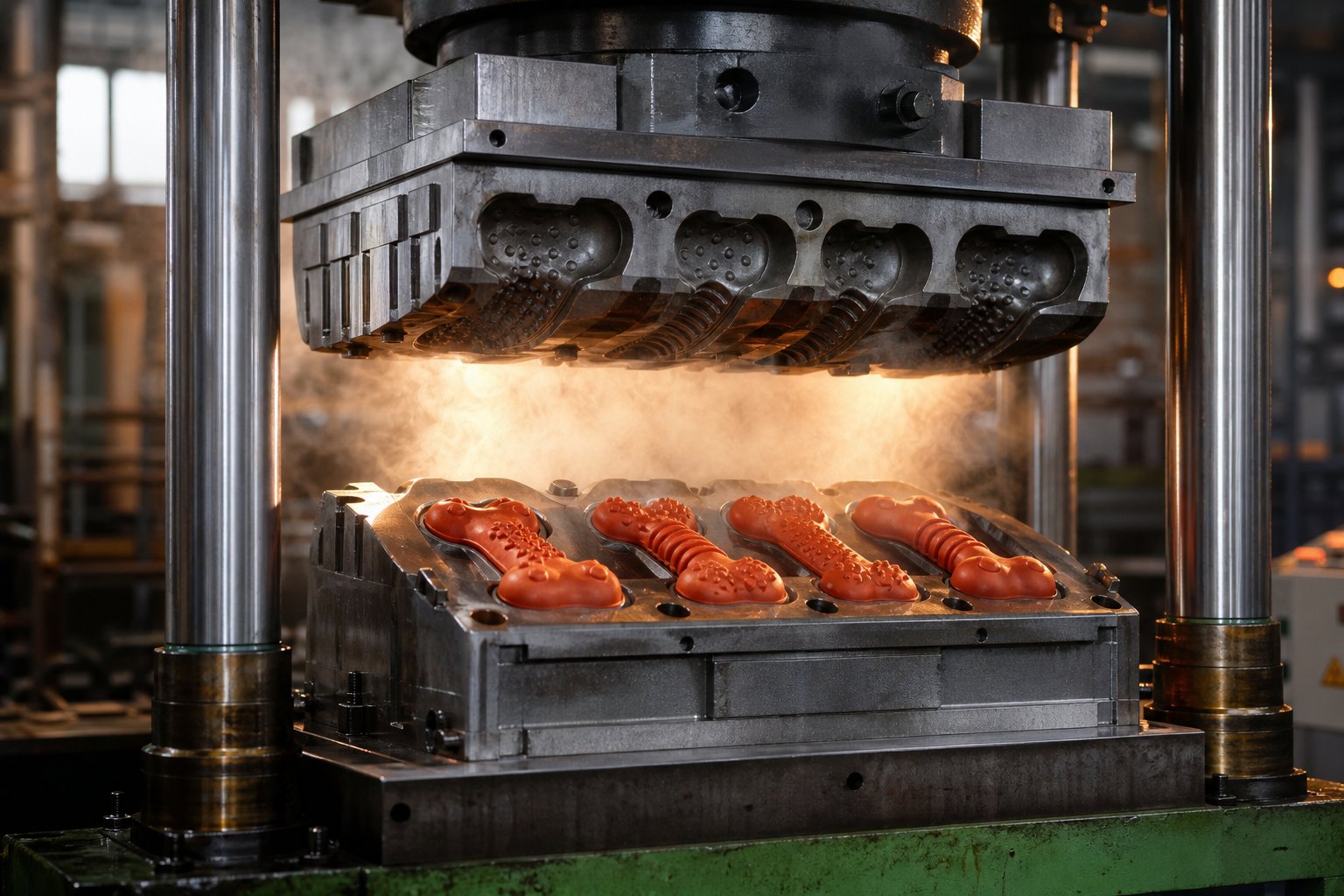
From raw rubber through compounding to compression molding and vulcanization, elasticity and rebound are its signature, with softness tiered by compound — covering puppy teething to large-dog discs. Odor depends on vulcanization residue and regrind ratio; low-odor compounds plus aired curing are the standard control. Locking the compound tier and odor grade in the order beats talking about good bounce.

Process: compression vulcanizing · Hardness: soft/medium/hard tiers · Odor: low-odor compound available

TPR·TPE (Thermoplastic Rubber)

TPR is the workhorse of modern chews: efficient injection molding, flexible colors and shapes, Shore-hardness tiers matched to bite feel. Buyers should ask for the grade and regrind ratio — regrind directly affects odor and durability. Its test items mirror natural rubber; heavy-metal migration and SVHC screening can be added as needed.

Process: injection molding · Hardness: Shore tiers · Key: grade and regrind ratio

Natural Latex

Latex is vulcanized from natural latex, soft and warm to the touch — the classic material for light chewers and puppy squeaky toys, with strong acceptance in EU channels. The vulcanizing process decides odor and elasticity; low-odor compounds are a standard option. Latex-protein allergy notes must be labeled honestly.

Process: vulcanized forming · Feel: soft · Label: allergy note

Vinyl (PVC)

Vinyl is rotation-cast from PVC paste: glossy surfaces, rich detail, and squeak chambers molded in one piece — the traditional squeaky-toy process. Its compliance focus is phthalate plasticizers: major markets set limits, and phthalate-free compounds are an upgrade option at a modest cost increase.

Process: rotocasting · Focus: phthalate limits · Option: phthalate-free compound

Nylon (PA)

Nylon is among the most chew-resistant engineering plastics: hard, wear-resistant, suited to power chewers and dental textures, with flavor masterbatch options. Its boundary must be stated too: high hardness comes with debris risk, so size selection and dog-size labeling must be honest — nylon is not for every dog.

Hardness: high (power chewer) · Option: flavor masterbatch · Boundary: debris and dog-size labeling

Cotton Rope & Sisal

Cotton rope is specified by ply and diameter; raw versus recycled cotton directly affects shedding. Sisal fiber is harder — the classic cat-scratcher material. Dyed rope needs locked color fastness and azo screening. End finishing is the safety-critical detail on rope toys, keeping loose strands from being swallowed.

Spec: ply and diameter selectable · Focus: shedding and ends · Dye: color fastness

Plush (Velour / PV Fleece / Imitation Rabbit)

Velour, PV fleece and imitation rabbit are the three main plush faces for pet toys; weight and pile height decide feel and shedding, and under-declared weight is a common low-end issue. The safety core of a plush toy is inside: seam strength, squeaker fixing and safety liners — do tear-down checks at inspection.

Spec: weight and pile tiers · Key: seam strength · Inner: safety liner

PP Fill

Fill decides a plush toy's loft and rebound; virgin and recycled fills are clearly tiered, weighed per unit at stuffing. Fill itself cannot be cleaned, so the ingestion risk after tearing is solved structurally: squeaker fixing plus a safety liner that locks the fill inside.

Process: weighed stuffing · Tiers: virgin/recycled · Structure: safety liner

EVA·TPU

EVA is light and buoyant — the usual material for discs and floating toys; TPU is tough and abrasion-resistant, mostly for retrieve balls and wear coverings. Both rebound well, smell low and wash easily. Test items follow the target market; check edge rounding and thickness on retrieve products to avoid crack scratches.

Trait: light and floatable · Process: foaming/injection · Detail: edge rounding

Corrugated Paper & Wood

Corrugated paper is the consumable behind cat scratchers; wood (such as coffee wood) goes into natural chews. The key for wood is moisture content: kiln pre-treatment controls cracking, with fumigation and quarantine documents for export. Paper and wood are both consumables — set the positioning and repurchase cadence at selection time.

Key: moisture control · Documents: fumigation/quarantine · Positioning: consumable

Odor Control

Heavy rubber smell drives returns — we write odor into a protocol

Buyer pain point three answered: low-odor compounds plus batch sensory rechecks turn no smell into an acceptable action.

Three odor sources

Odor comes from three places: vulcanization residue, regrind ratio and additive masterbatch. Control the sources first: locked low-odor compounds, masterbatch brand and batch records, regrind at the agreed ratio.

Low-odor compounds

Low-odor compounds cost more, but usually beat the loss of unboxed returns; the compound tier and price are listed separately in quotations, not folded into good quality.

Batch sensory protocol, three readings

Every batch is graded on three readings: at unboxing, after kneading, after confinement. The grading sheet ships with goods; failing batches are aired and rechecked or not shipped; the protocol can be written into order annexes.

For the full method of writing odor standards into orders, see the articles Why Some Rubber Toys Smell and Odor Inspection at Batch Level. Read the odor-control article
Food Contact

Food contact for treat toys: what to ask, what to test, how to verify

Buyer pain point one answered: unclear material safety — with kibble in long contact inside the cavity, terms must be settled early.

What to ask suppliers

Ask three things: whether cavity materials are selected to food-contact grade; whether references such as overall migration have been tested; whether the opening comes apart for washing and drying. Answers must land in reports and samples, not verbal assurances.

Optional test items

Food-contact references such as overall migration, heavy-metal migration (EN 71-3 lines) and phthalate screening (vinyl versions) can all be tested voluntarily, configured per target market, reports shipped with goods.

Verifying supplier evidence

Check reports on five points: whether the testing party matches the supplier, whether samples are described specifically, whether standard numbers appear, whether sample counts suffice, whether the report is expired. Any ambiguity means requesting corrected documents.

For treat-toy selection and structure details, see the category page; for the full report-verification method, see the article on reading pet toy test reports. Open the treat-toy page · Read the report-verification article
Selection Matrix

Species × play style × price tier: one small table to fix the material combo

Fix play style and bite style first, then material and price tier; the full derivation and failure modes are in the article on the material selection matrix.

Species & price tierLight chew · interactiveMedium/heavy chew · durable
Dog · entry tierNatural latex, cotton ropeTPR (medium hardness)
Dog · mid tierTPR, natural rubberNatural rubber (hard), nylon
Dog · power-chew tierNatural rubber (hard)Nylon, TPR-overlaid builds
Cat (all tiers)Plush, feather attachments, corrugated paperSisal, corrugated paper (scratchers)

See the full selection-matrix derivation

FAQ

Four questions on materials and compliance

Must pet toys be certified for export?
Pet toys carry no mandatory toy-standard certification; voluntary testing against toy standards such as EN 71 and ASTM F963 is industry practice, and child-product certificates like CPC do not cover pet toys. We configure test items per target market and label applicable boundaries honestly — see the quality page.
How do I judge whether a supplier's test report is credible?
Watch for five red flags: testing party mismatched with the supplier, vague sample descriptions, missing standard numbers, too few samples, expired reports; any ambiguity means requesting corrected documents or retesting.
Does a low-odor compound mean no smell at all?
To be honest: low odor is a magnitude improvement from compound and process control, not zero odor. We grade every batch on the three-reading sensory protocol, ship the grading sheet, and compare against kept samples.
How do I apply the selection matrix to my assortment?
Fix species and play style first (light chew, medium/heavy chew, destroyer), then pick the material combo by price tier, and finally configure test items to match. The full derivation and failure modes are in the article on the material selection matrix.
Further Reading

Two articles on material selection and odor inspection

Send us your toy list — a straight answer within 12 hours

Category + quantity + target market: we reply with FOB ranges, sampling lead time and testing advice.