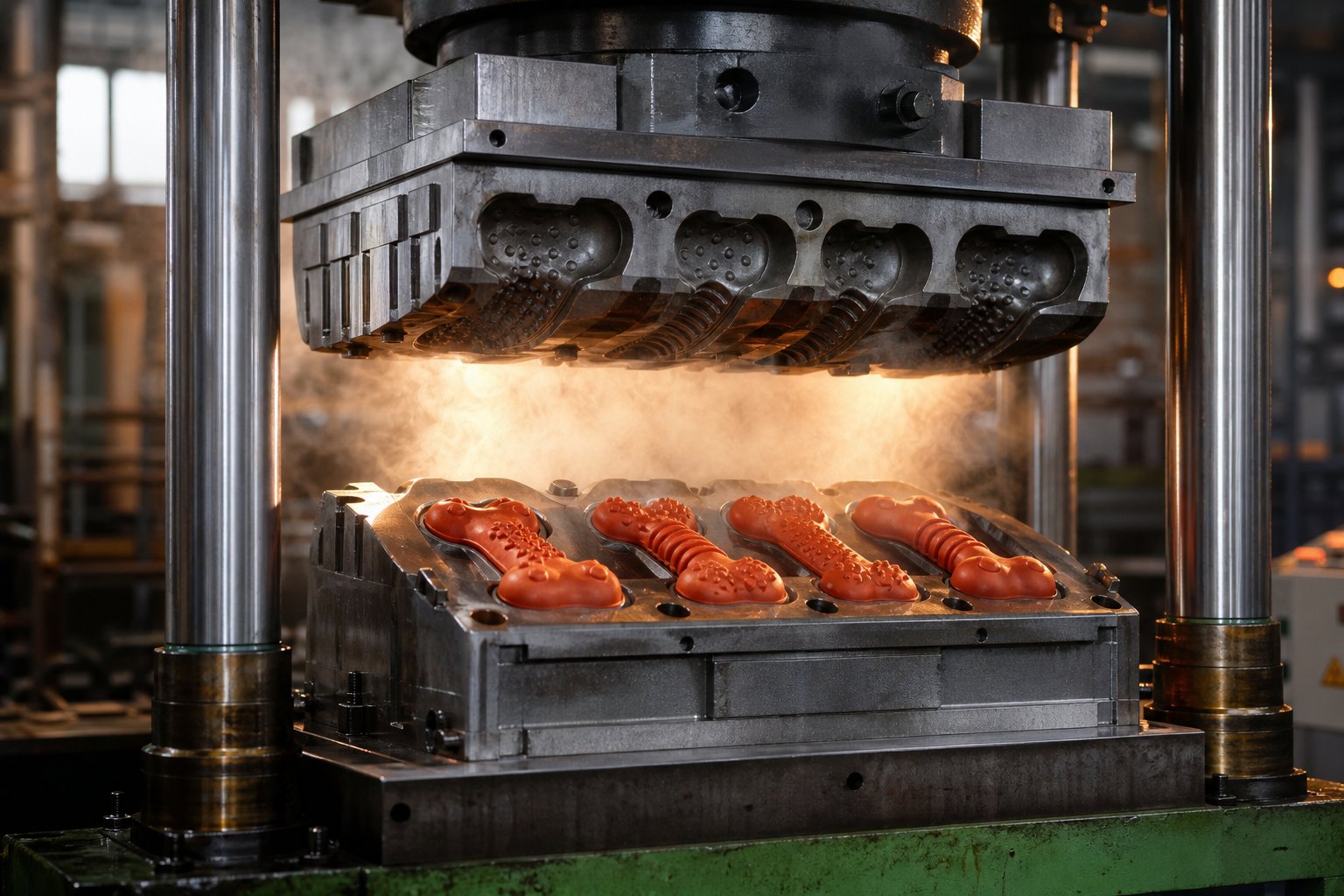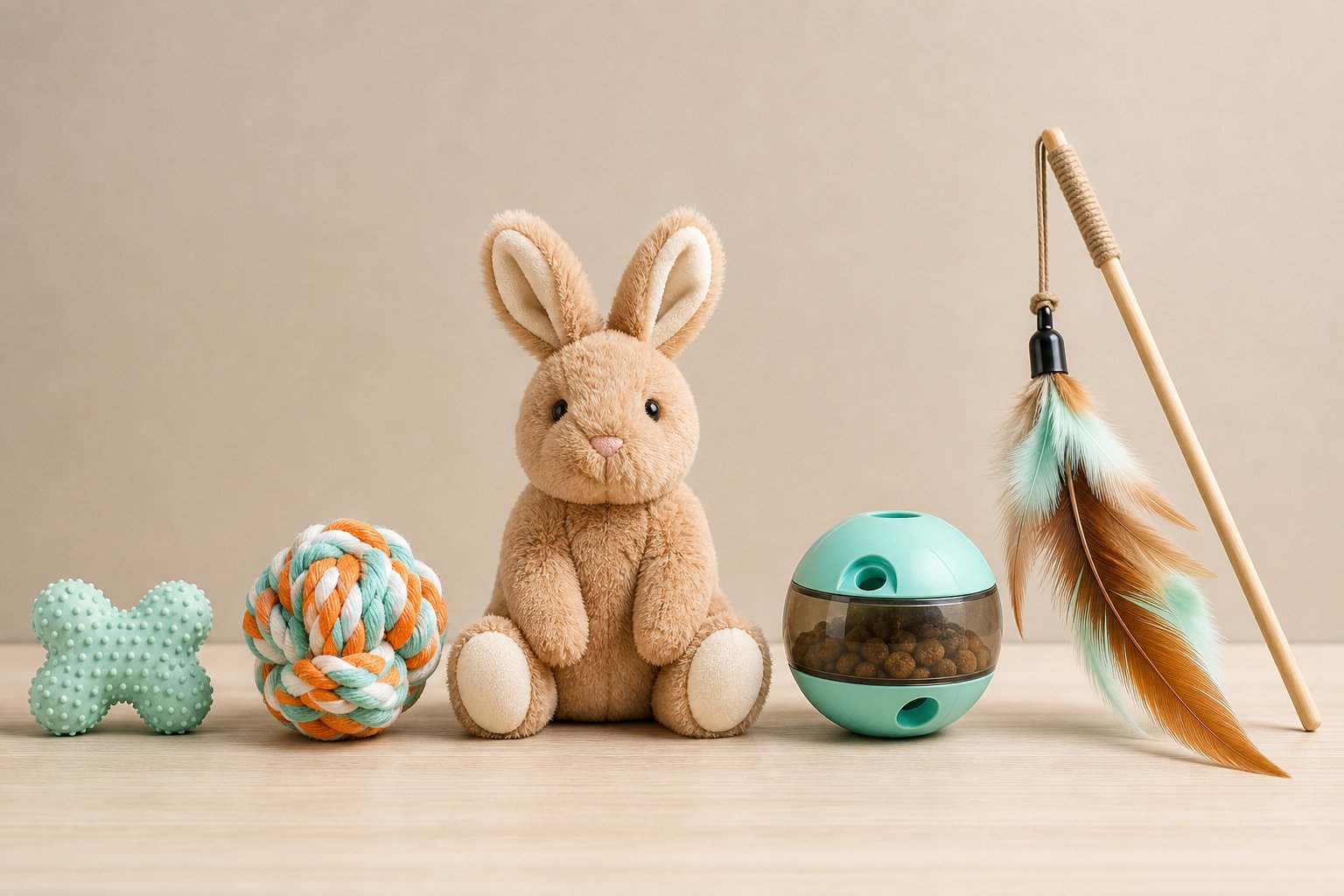
TOYORIGIN organizes pet toys into eight categories — chew, plush, rope, treat & puzzle, latex, cat, interactive and fetch & outdoor. Each category answers what it is, how to choose and who it fits, with material options, durability grades and three-tier MOQ terms consistent site-wide — so you can shortlist your first SKUs right on this page.
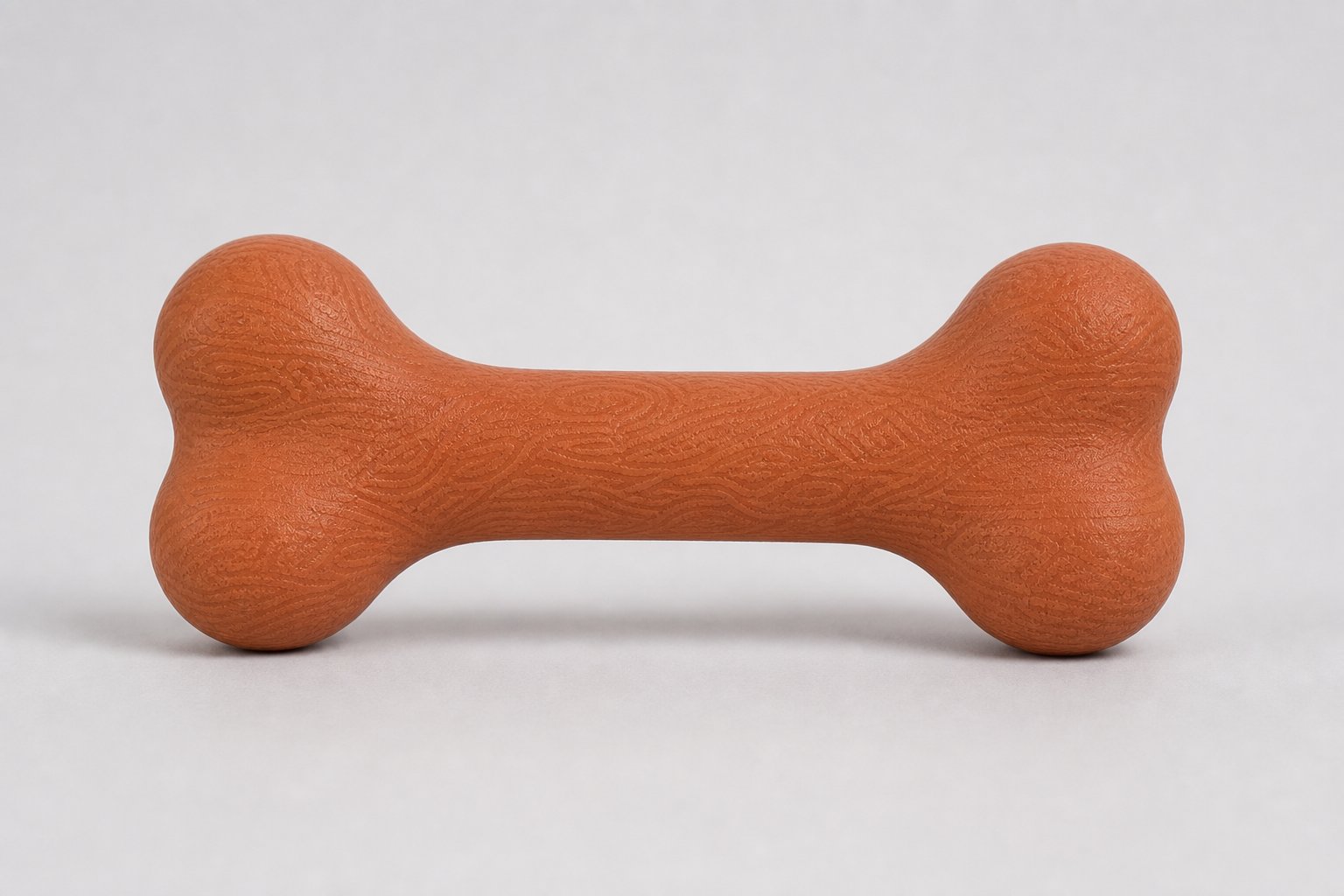
Each block answers four questions — what it is, how to choose, who it fits and how it differs from neighboring categories — so this page supports a sourcing decision even without a single product photo.
Chew toys are the single largest product type in pet toys and most buyers' first SKU pool: chew and molar items account for 25.4% of the global pet toy market, per Grand View Research (2025). They channel a dog's natural chewing drive — teething discomfort, alone-time energy and daily dental massage. Choose by bite class first: light chewers suit natural latex and soft TPR, medium chewers fit high-rebound natural rubber, and power chewers move up to nylon; then match the size range to body weight — go larger, never smaller. The line to latex squeaky toys: chew toys promise durability and dental action first, sound is only a bonus. Ideal for DTC testing, marketplace shelves and permanent retail assortments; 1,200+ stock SKUs support private label from 200 pcs per design.
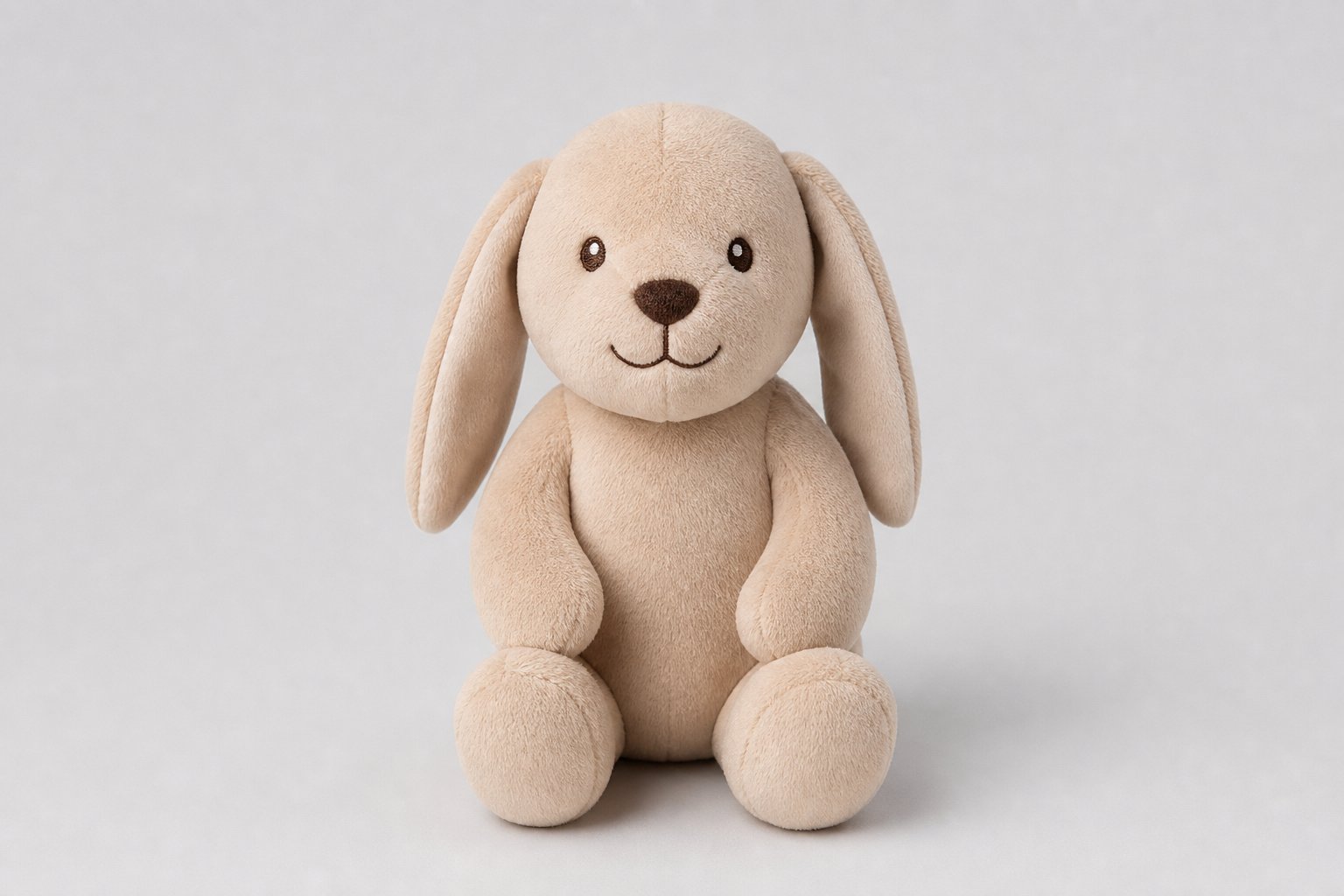
Plush squeaky toys win on companionship: soft fabrics plus a squeaker mimic prey and playmates, fitting puppies, light-to-medium chewers and family dogs that mainly cuddle and carry. Judge them on three craft points — seam strength (stitch density and thread spec decide tear life), squeaker attachment (sewn beats glued; a detached squeaker is a one-star review) and fill with an inner safety layer for bite-through scenarios. Plush is also where negative reviews concentrate: shedding, open seams and dead squeakers cover most returns, so walking a factory from cutting through sewing, stuffing and needle detection beats another round of price comparison. The difference from rope and chew lines: you are selling emotional value, so tactile feel and sound outrank extreme durability. Fits subscription boxes, holiday gifting and DTC brand lines.
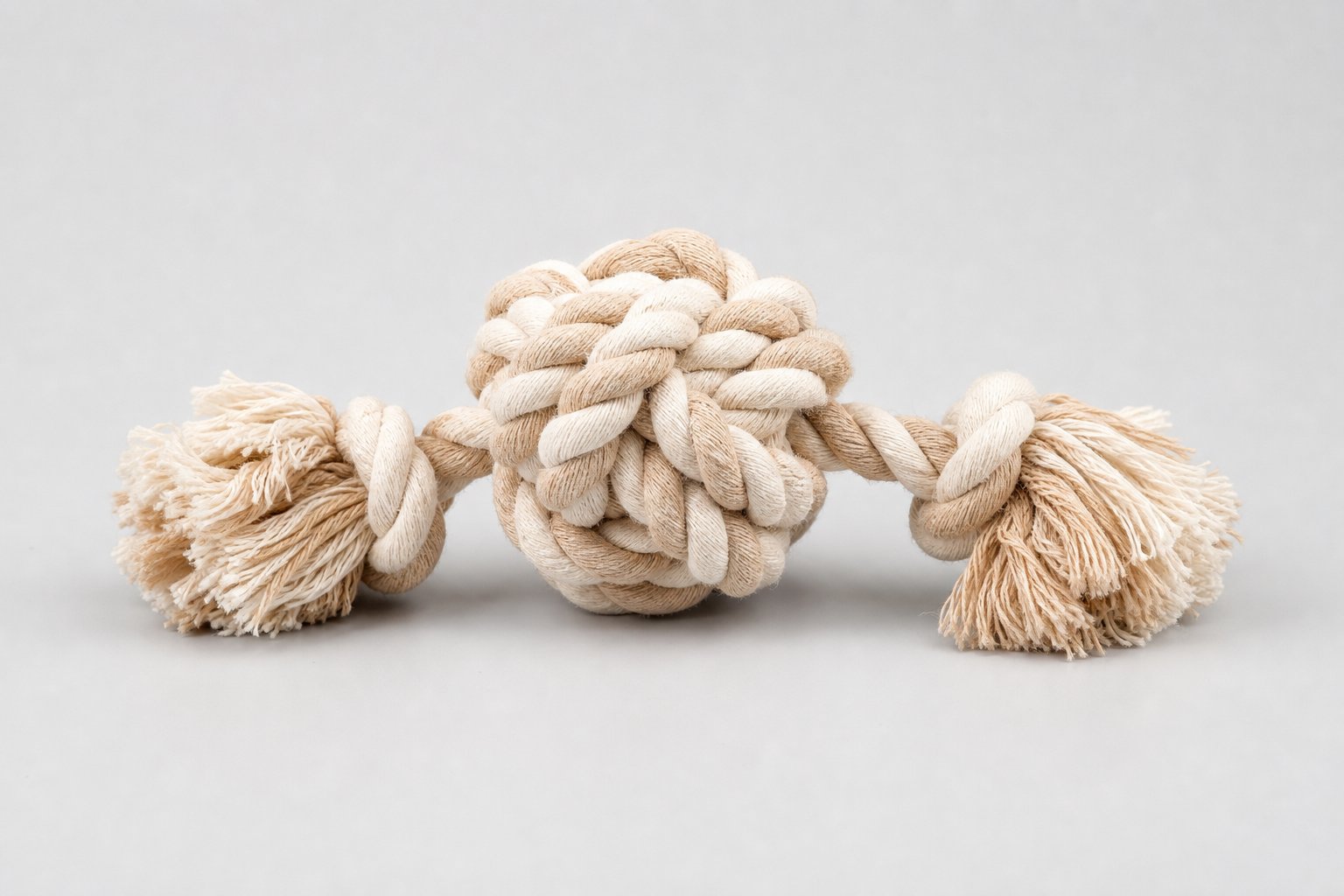
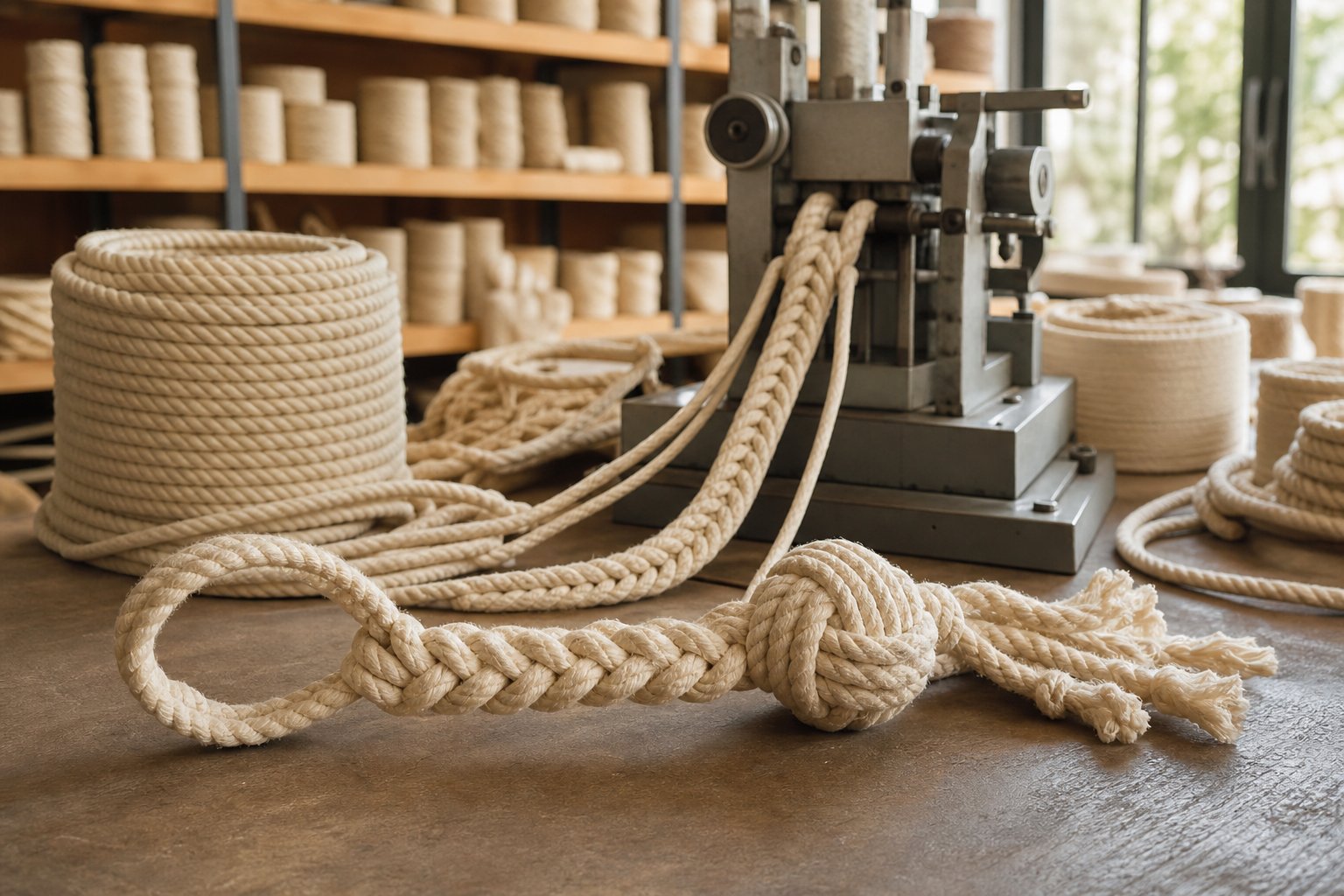
Rope and tug toys are the interaction medium between you and the dog: tug, fetch and fiber dental cleaning in one item, built from two natural fibers — cotton rope and sisal — that Western channels favor. Choose on three parameters: ply count and rope diameter (bite feel and durability), density and shedding control (recycled cotton sheds; virgin cotton holds better), and dye colorfastness (it must survive saliva soaking before entering retail). This is also the easiest category to order by spec: write ply, diameter and weight into the PO and quality stays locked. Per the China Pet Industry White Paper (Paidu, 2025), 72.1% of dog owners buy toys — toys rank first among dog supplies — and interactive lines are perennial shelf items. Unlike plush, fiber construction suits nearly every dog, especially medium and large breeds; a natural entry point for mixed wholesale containers and private label.
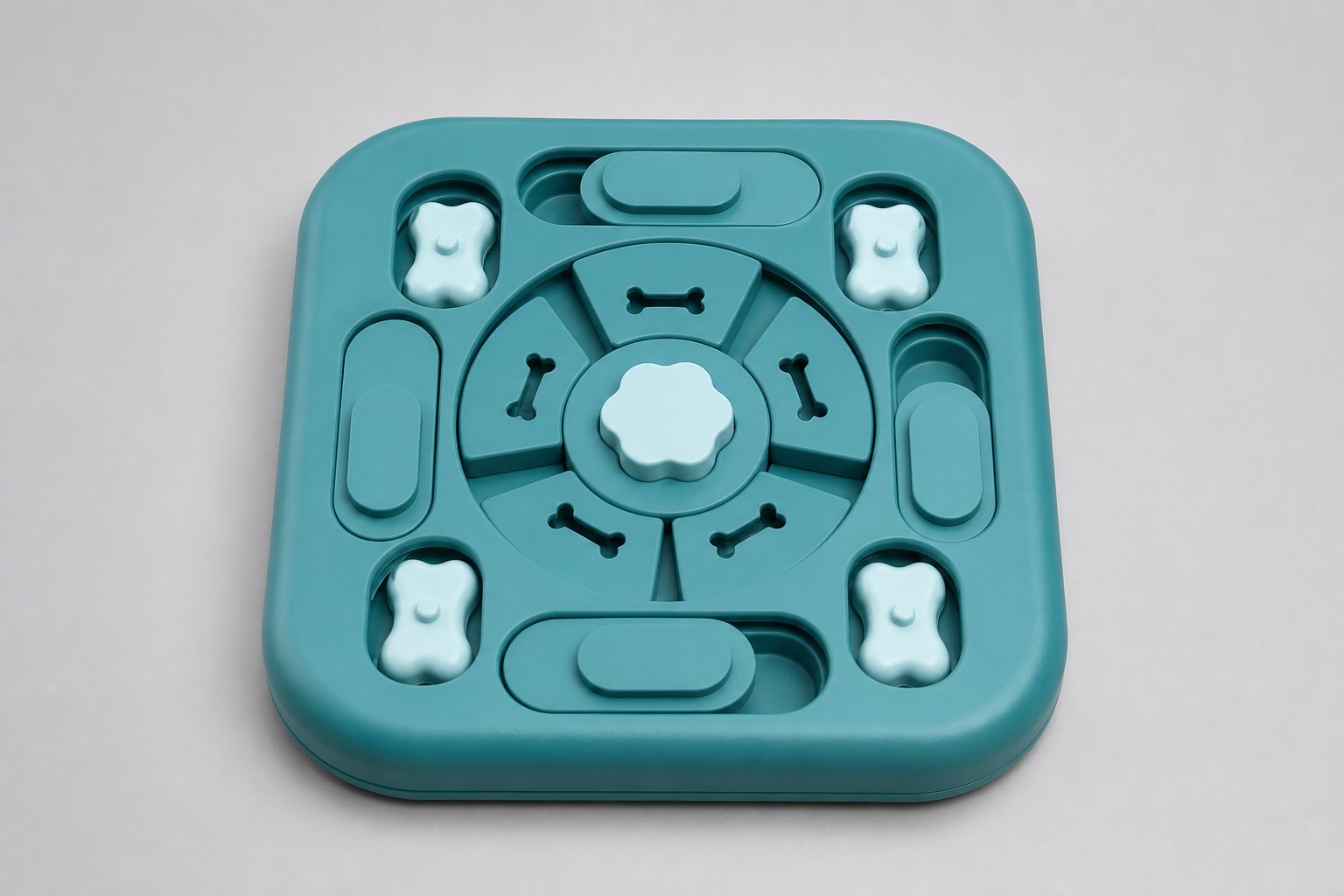
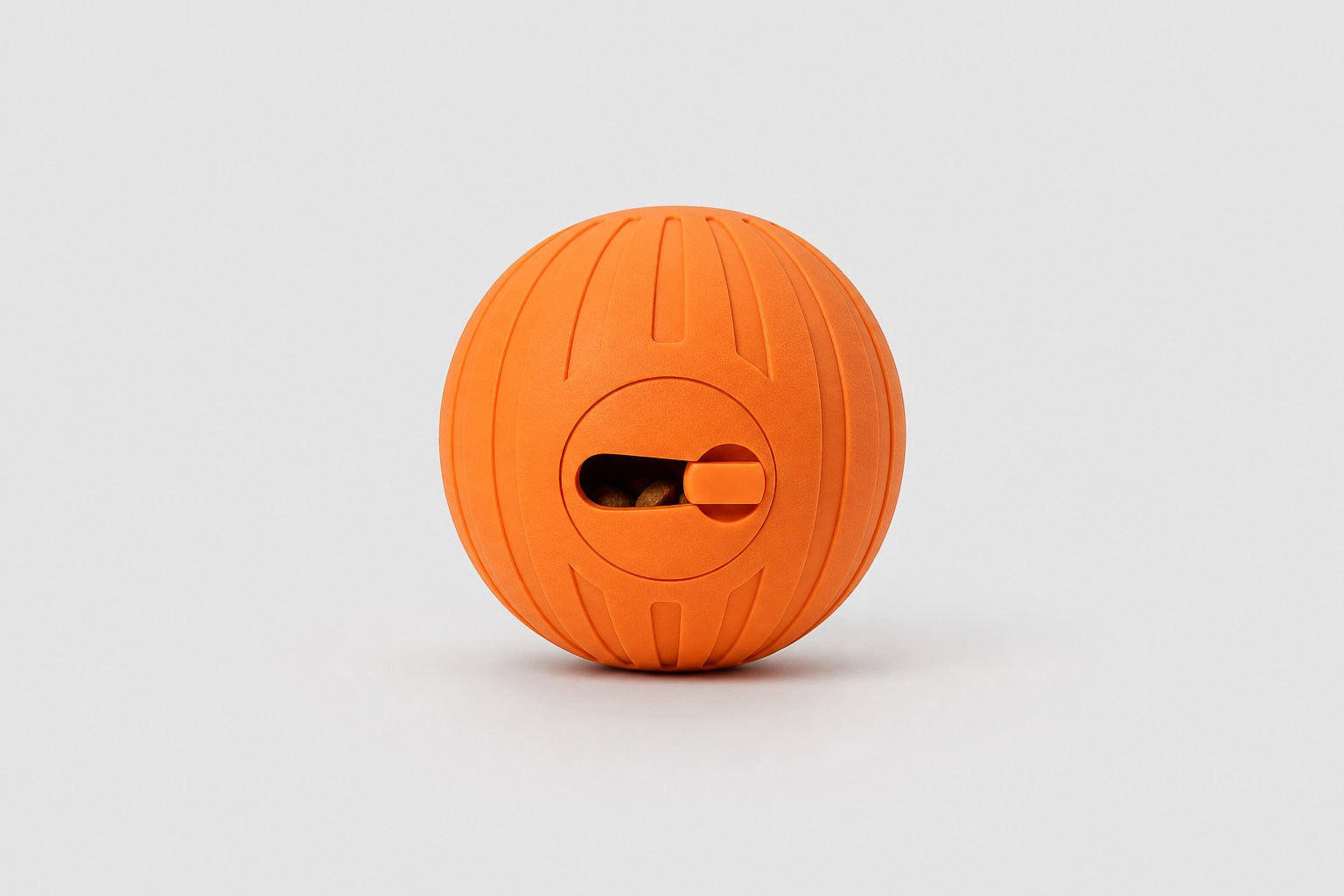
Treat and puzzle toys turn eating into play: adjustable dispensing openings, maze structures and rolling balls make dogs work for their food, easing both fast eating and alone-time destruction — the logic is function, not extreme durability. Check three things: whether food-contact-grade material options are offered (ask the factory proactively for overall-migration test data on mouth-contact parts), whether the opening is adjustable (to fit different kibble sizes), and whether the structure can be dismantled and washed. Per an industry survey cited by Grand View Research (2025), about 40% of pet owners spend on toys and enrichment, and puzzles are the entry point of that spend. Versus chew toys: chewing satisfies the jaw, puzzles satisfy foraging; versus motorized interactives: no power supply and no after-sales burden. A strong fit for DTC content marketing and bundle add-ons.
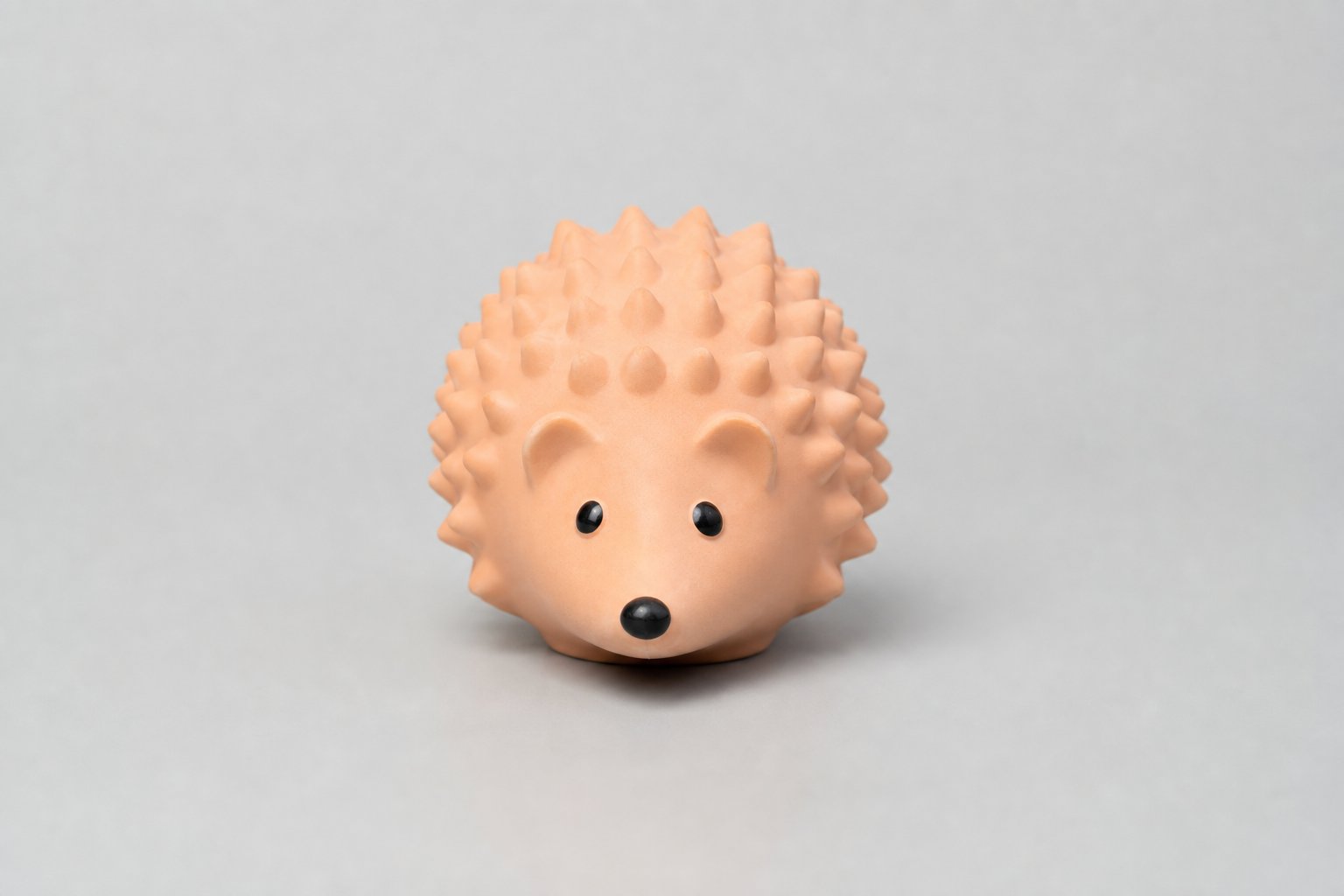
Latex squeaky toys are the natural camp of soft toys: vulcanized natural latex feels soft and springs back, paired with a low-pitch squeaker — a fit for puppies, small breeds and seniors with limited bite force. Evaluate three points: odor (low-odor compounds plus batch sensory re-checks defend the unboxing experience), vulcanization quality (it decides rebound and service life) and squeaker loudness (low-pitch models review better). EU buyers are increasingly sensitive to phthalates and odor, and natural latex has become the mainstream route replacing vinyl (PVC) — the deepest difference from neighboring categories: a different material route means a different compliance story and audience. Unlike chew toys, latex lines promise gentle play, not heavy-duty chewing. Fits EU channels, boutique pet stores and entry brand lines.
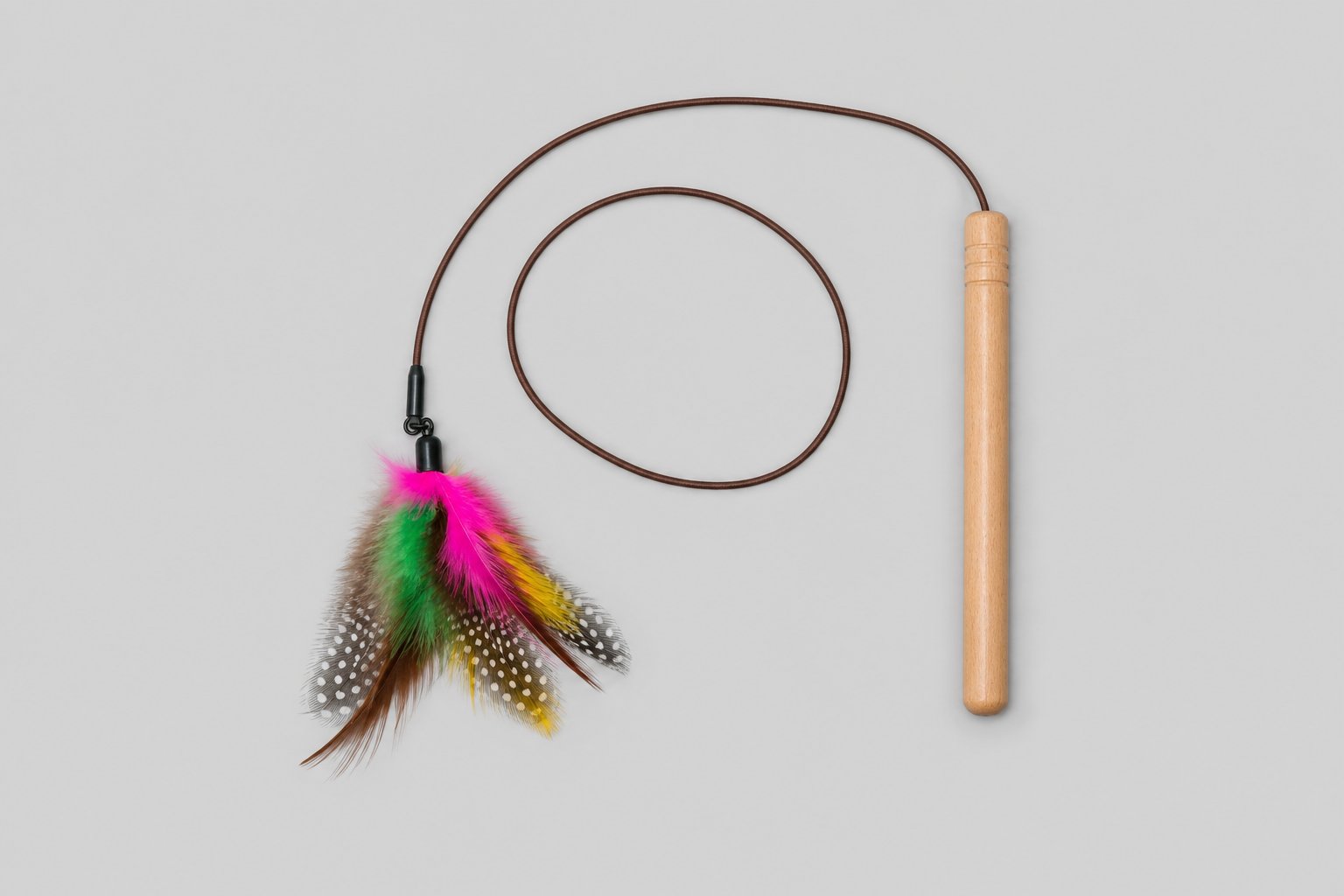
Cat toys span teaser wands, catnip and silvervine toys, sisal and corrugate scratchers, feather wands and rolling balls — mapping to the feline hunting sequence (stalk, pounce, kick) and the scratching instinct. Europe is the home ground: per FEDIAF (2026 edition, 2024 data), Europe counts 140 million pet-owning households (49%) and 306 million pets, with cats leading in number. Check three things: the attractant fill (catnip/silvervine loading, evaporation decay and pesticide testing), scratcher material density (sisal versus corrugate endurance) and small-part attachment (pull tests on feathers and bells). Versus dog toys: cat toys are low-ticket, fast-iterating and launch-driven — built for subscription boxes and small multi-SKU orders; manual play lives here, powered items belong to the interactive category.
Interactive (motorized) toys cover auto teasers, powered rolling balls and smart treat-hide units with a motor or USB charging — enrichment when the owner is away, for indoor dogs and cats left alone for long hours. Evaluate four points: motor noise (it decides experience and return rate), charging scheme and battery life, outer covering (TPR over-molding takes chewing better) and electrical safety with multilingual manuals. This is the only powered line among the eight: it does not enjoy the battery-free logistics freedom of the other toys, so plan first-leg freight and platform compliance early — the most practical difference from treat puzzles: higher automation, a longer supply-chain path. The boundary with cat toys: manual teasers stay in cat toys, powered ones live here. Suits brand owners and DTC sellers seeking a differentiation premium.
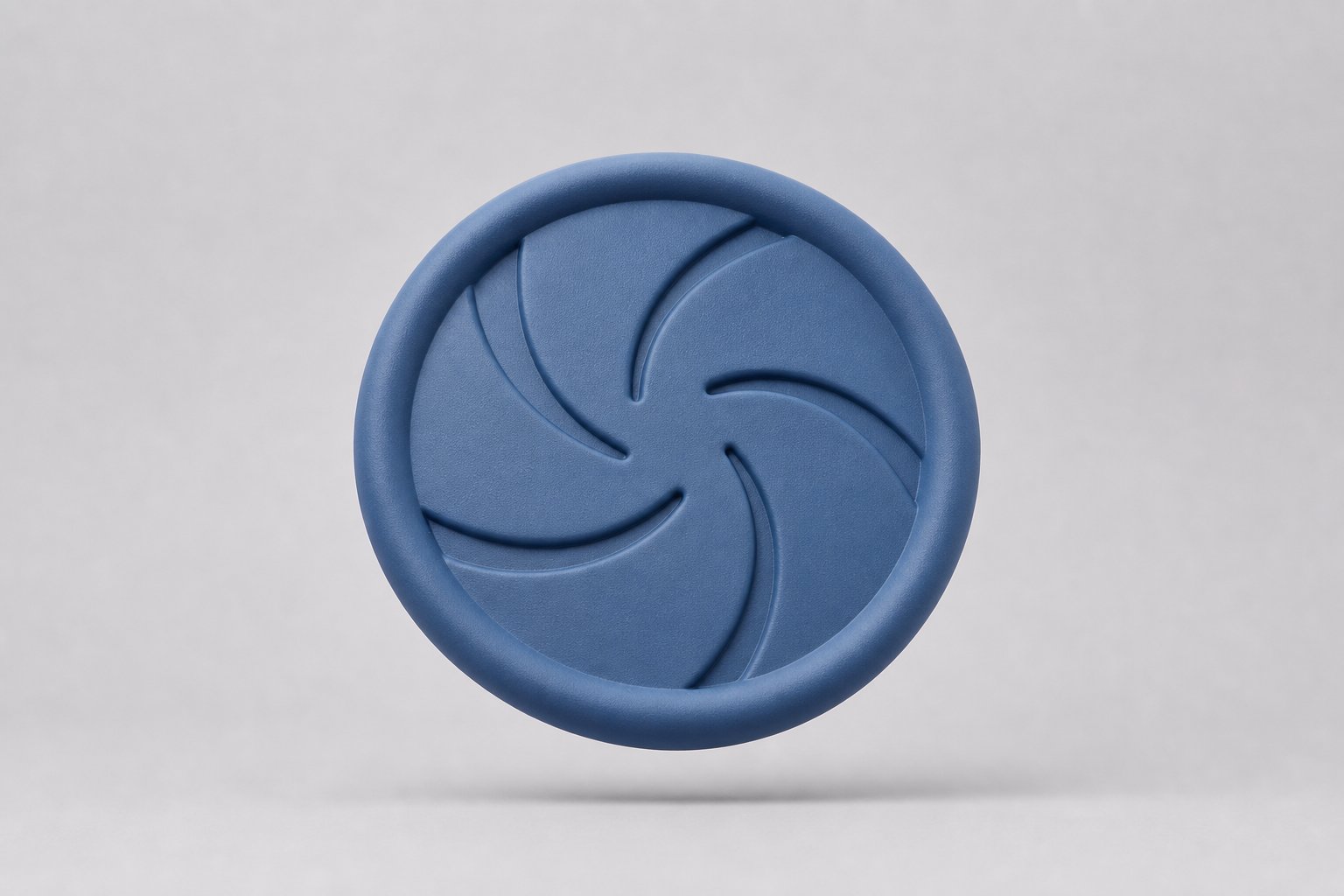
Fetch and outdoor toys serve shared human-dog outdoor scenarios: rubber discs, fetch balls and throwers used on lawns, in parks and at the beach — selection revolves around weatherability and safety. Check four points: material softness (tooth-friendly beats flight distance; hard plastic discs hurt teeth), weatherable compounds (no brittleness under sun and soak), floatability (a plus for water play) and size-to-breed match (large diameters for large dogs). The US is the largest single market for fetch play: per APPA's official release (2025), US pet industry spending reached USD 158 billion (+3.7% year on year), with the spring-summer outdoor season and Q4 gifting as the two stocking windows. Versus chew toys: fetch gear is interactive equipment, weak on alone-time; versus rope: solid bodies, not fiber. Fits spring-summer launches and seasonal retail displays.
Compare target pets, play pattern, materials and testing focus side by side, and shortlist your category mix in three minutes.
| Category | Target dogs & cats | Core play | Main materials | Testing focus | MOQ tier (pcs/design) |
|---|---|---|---|---|---|
| Chew Toys | All sizes, from teething puppies to power chewers | Solo chewing · dental massage | Natural rubber / TPR / nylon | EN 71-3 migration · colorant heavy metals | 200 / 1,000 / 3,000 |
| Plush & Squeaky | Puppies and light-to-medium chewers | Comfort carrying · soft play | Plush / PP fill / squeaker | EN 71-2 flammability · seam & squeaker pull | 200 / 1,000 / 3,000 |
| Rope & Tug | Medium & large dogs; suits all breeds | Tug games · fiber dental cleaning | Cotton rope / sisal | Colorfastness · fiber content & shedding | 200 / 1,000 / 3,000 |
| Treat & Puzzle | All sizes (fast eaters / solo destructors) | Slow feeding · foraging puzzles | Food-contact-grade plastic / rubber | Food-contact testing · small parts | 200 / 1,000 / 3,000 |
| Latex Squeaky | Puppies · small breeds · seniors | Gentle squeaky chewing | Natural latex / vinyl | Phthalates · REACH SVHC · odor | 200 / 1,000 / 3,000 |
| Cat Toys | Cats of all ages | Chase & pounce · scratching | Catnip / sisal / feather / corrugate | Attractant residue · small-part pull | 200 / 1,000 / 3,000 |
| Interactive | Indoor dogs & cats (long alone time) | Auto play · enrichment | Motor / TPR / plush | Battery & electrical safety · noise | 200 / 1,000 / 3,000 |
| Fetch & Outdoor | Medium & large dogs · outdoor families | Fetch sport · outdoor play | Rubber / EVA / TPU | EN 71-3 migration · weathering | 200 / 1,000 / 3,000 |
The three MOQ tiers are a site-wide standard: in-stock private label from 200 pcs per design (mixed designs from 600 pcs); OEM custom from 1,000 pcs; ODM new molds from 3,000 pcs. Figures are common trade magnitudes that vary with design and configuration; the formal quotation prevails.
Testing focus lists voluntary, market-specific directions; testing pet toys against toy standards is industry practice, not a mandatory requirement — see the quality page for applicability boundaries.
Material choice is the first question across all eight categories: these three articles do the math for chew, rope and latex.
Category + quantity + target market: we reply with FOB ranges, sampling lead time and testing advice.