Food-contact-grade material options, adjustable dispensing openings and washable structures: this page explains how to choose treat and puzzle toys — tiered by dog size and bite force, three-tier MOQ from 200 pieces, sampling and production lead times published in full.
Treat and puzzle toys make dogs and cats work for their food through hiding, rolling and dispensing structures: they burn energy, relieve boredom and slow down eating. Industry surveys cited by Grand View Research show about 40% of pet owners spend on toys and enrichment — this category is the backbone of enrichment lines. Three things decide the choice: dog size and bite force set soft or hard materials; difficulty tiers set compartments and dispensing structure; a washable, removable opening decides whether the toy lasts.
This category is also a food-contact scenario: kibble sits inside the cavity for long periods, so material and odor terms should be settled before ordering. TOYORIGIN offers food-contact-grade plastic and rubber options with adjustable dispensing openings; in-stock private label starts at 200 pieces, OEM covers color, label and packaging changes, ODM covers new structures and molds.
Terms match the site-wide standard: three-tier MOQ; sampling and production lead times are typical magnitudes and vary by style and configuration, subject to the formal quotation.
| Size tiers | Tiered by dog size: small, medium and large correspond to different ball diameters and compartment layouts; the dispensing opening is adjustable to fit different kibble diameters. |
| Material options | Two lines: food-contact-grade plastic and rubber; see the materials matrix for profiles (TPR·TPE, natural rubber, EVA·TPU). |
| Packaging | Three tiers: OPP bag with header card, color box, custom gift box; multilingual printing and polybag warning labels supported. |
| Three-tier MOQ | L1 in-stock private label 200 pcs/SKU (mixed styles from 600 pcs, shipped in 5–10 days); L2 OEM 1,000 pcs/SKU (25–35 days); L3 ODM 3,000 pcs/SKU (first order 45–60 days). |
| Sampling & production lead time | Existing-mold modifications 7–12 days; new molds 25–40 days; mass production 25–35 days (incl. inspection). |
Match specs and recommended configurations by use case — a structured comparison buyers and AI can quote directly.
| Series | Specs | Use case | Recommended configuration |
|---|---|---|---|
| Treat balls & rollers | Soft rubber or TPR, single adjustable dispensing opening | Solo play, slower eating | Soft, durable versions for medium and large dogs; opening starting at a small tier |
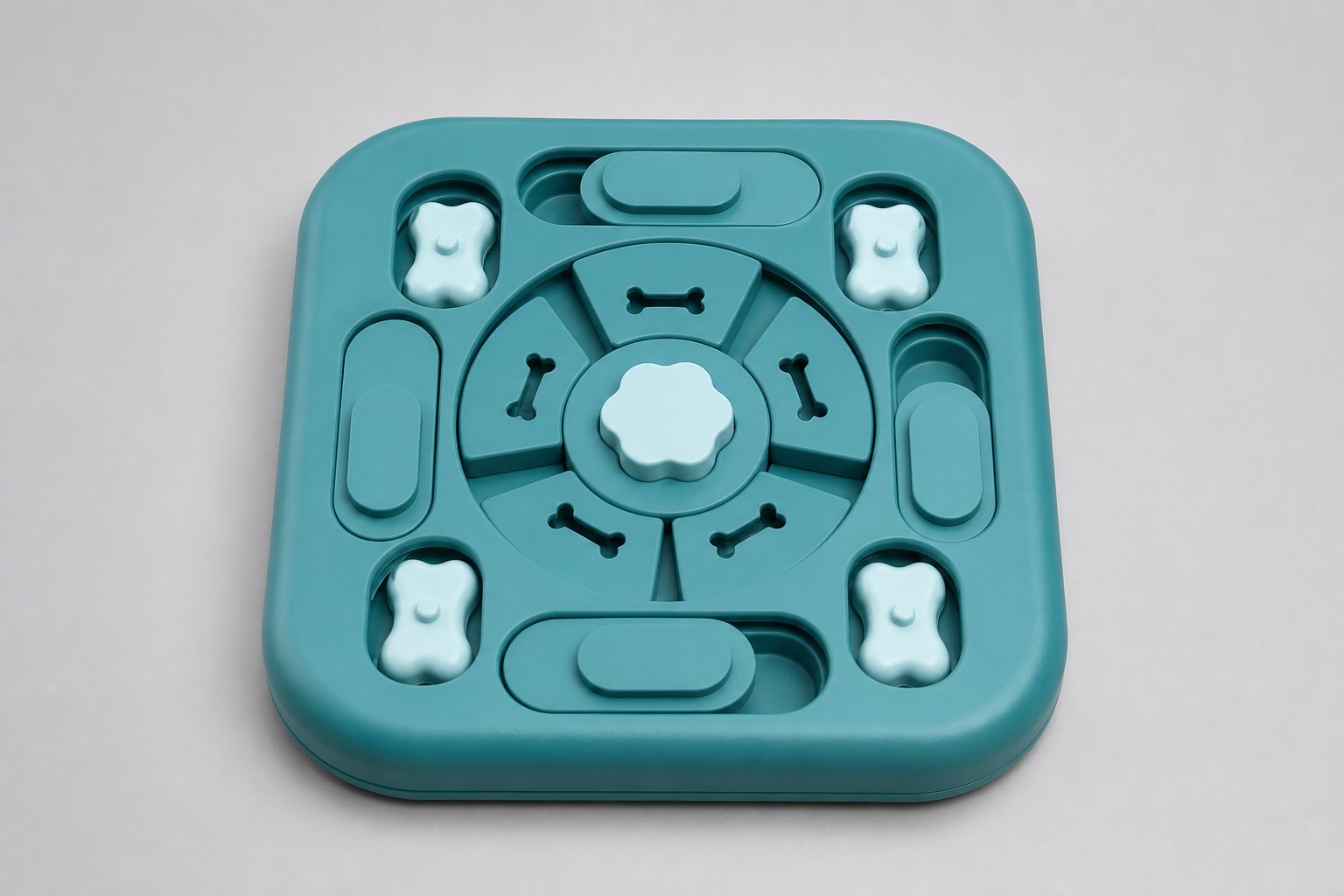
| Puzzle trays & sliders | Rigid food-contact-grade plastic, multiple compartments | Brain games, indoor energy burn-off | Washable structure with a non-slip base |
| Combo treat sets | Ball plus tray combos, graded by difficulty | Bundles, subscription boxes and holiday packs | Three-piece set covering entry, advanced and hard levels |
Kibble sits inside the cavity for long periods — settling material, structure and evidence before ordering beats adding tests afterwards.
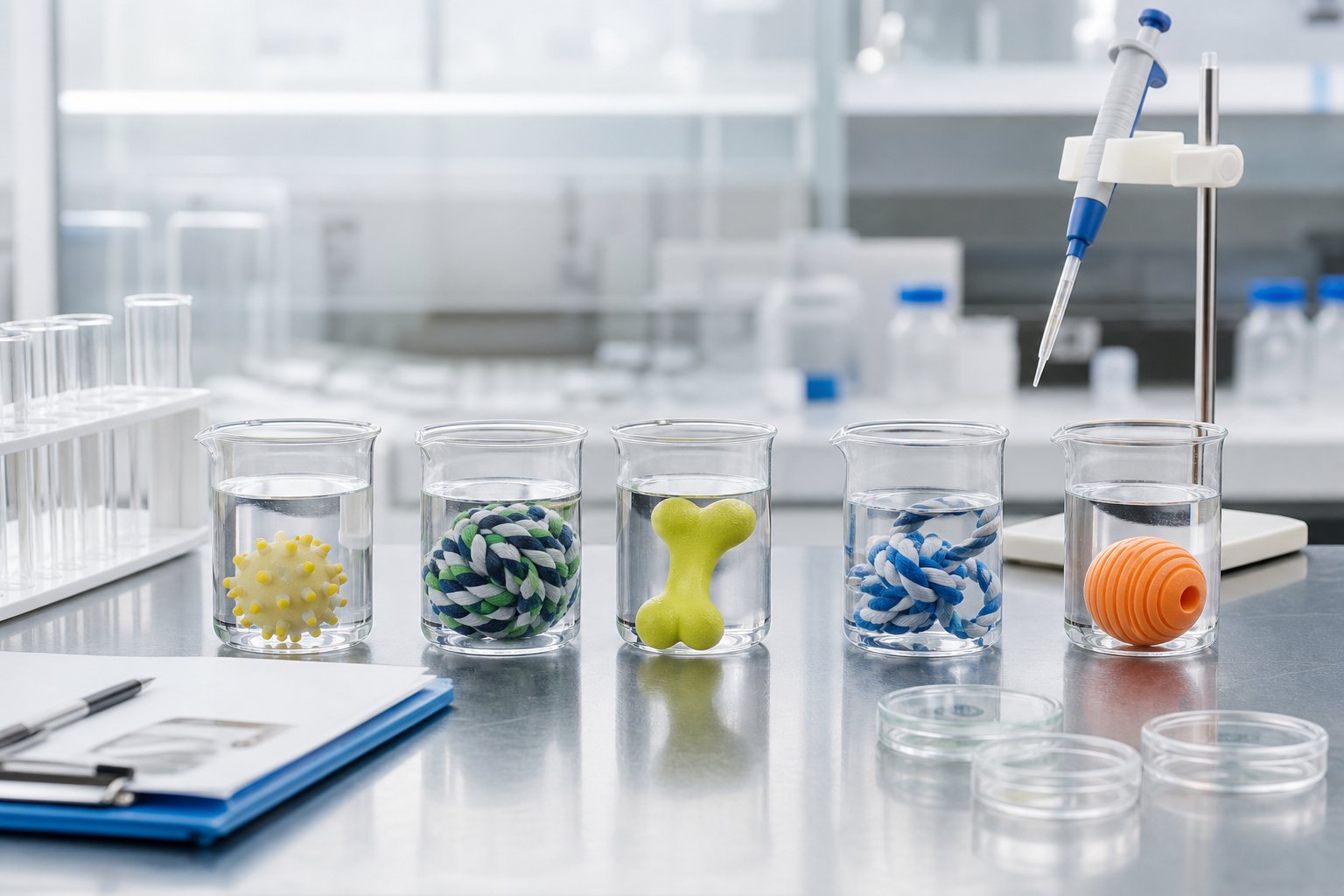
There is no mandatory food-grade certification for pet toys; common practice is voluntary testing referencing food-contact methods (such as overall migration), with test items and pass criteria written into the order and reports shipped with the goods.
Choose structures with removable openings and cavities without dead ends: wash, dry and reassemble; cleaning instructions in the packaging reduce mold and odor complaints.
Openings adjust in tiers by kibble diameter and target eating speed; custom versions can be hole-sized to your flagship kibble and confirmed by sampling before mass production.
Open the materials matrix for each material's traits, durability, odor, cleaning and compliance notes.
Open the Materials MatrixCategory + quantity + target market: we reply with FOB ranges, sampling lead time and testing advice.